

What to Do in Asilah: The Complete Guide (Medina, Beaches & Hammam)
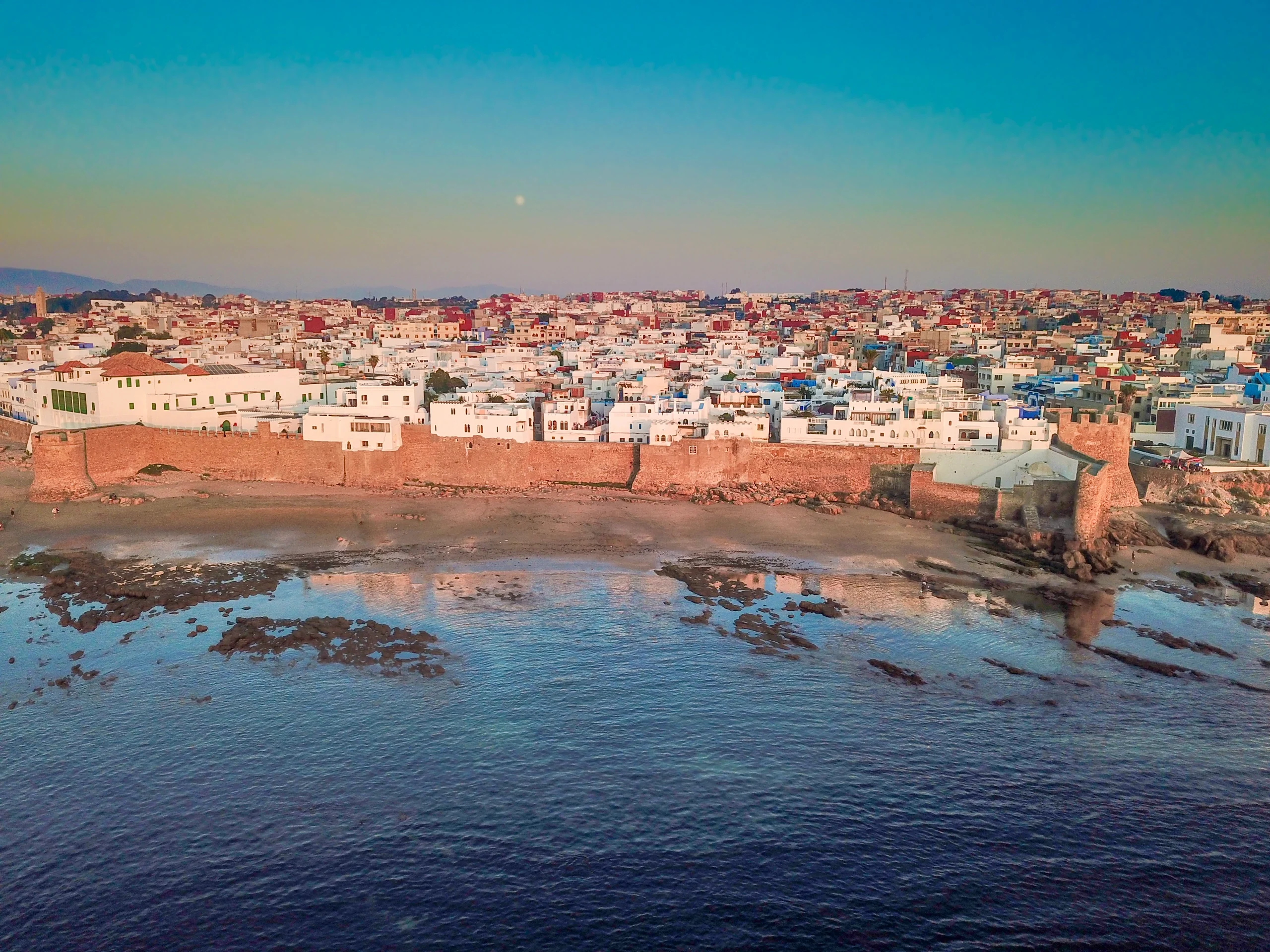
Asilah is a small walled city on the Atlantic coast of Morocco, about a 45-minute drive or train ride south of Tangier. Its medina, of Phoenician origin and fortified by the Portuguese in the 15th century, combines whitewashed streets, urban art murals, and an ocean viewpoint that has become one of the most photographed sunsets in North Africa. Among the must-do activities in Asilah are walking along its walls, getting lost in the souk, swimming at its beaches, and experiencing a traditional hammam facing the sea. This guide brings together its history, what to see in the medina, the best beaches, where to eat, when to travel, and the most frequently asked questions before visiting.
Table of Contents
- Brief history of Asilah
- What to see in the Asilah medina
- 15 things to do in Asilah
- Beaches of Asilah
- Where to eat: Al Alba Restaurant
- Relaxation and wellness: Hammam Al Alba
- Shopping in the medina
- How to get there and get around
- Excursions from Asilah
- When to travel: climate
- Where to stay
- Frequently asked questions
Brief history of Asilah
Phoenician and Roman origins
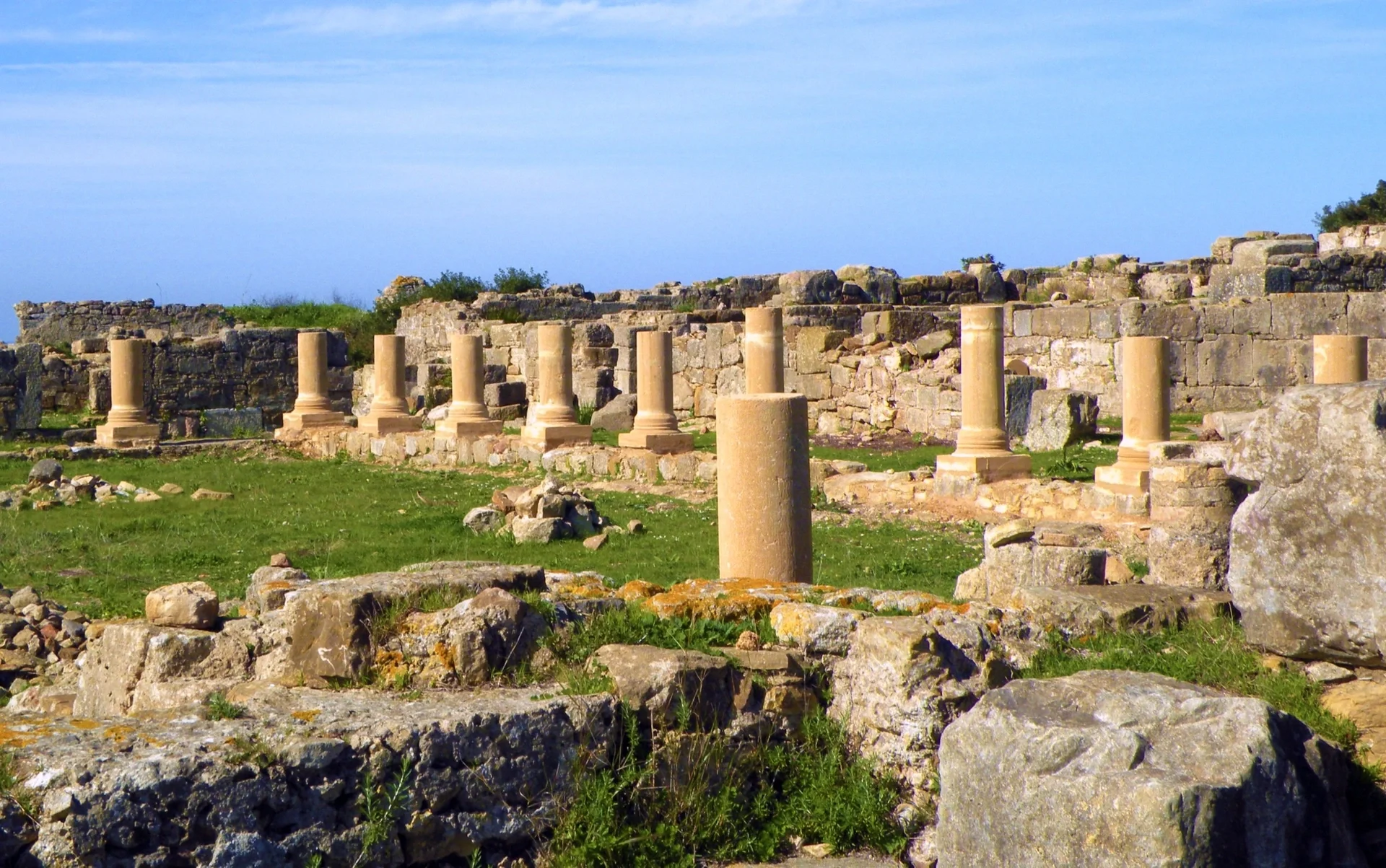
The Phoenicians founded a trading post known as Zilil in this enclave, taking advantage of its protected position facing the Atlantic. Over time, it passed into Carthaginian hands and, during the Roman era, maintained its role as a minor transit point on the route connecting to Volubilis in the interior. Centuries later, under Arab rule, the Idrisid dynasty rebuilt the settlement and gave it the name by which it is known today.
The Portuguese conquest and the walls (1471)
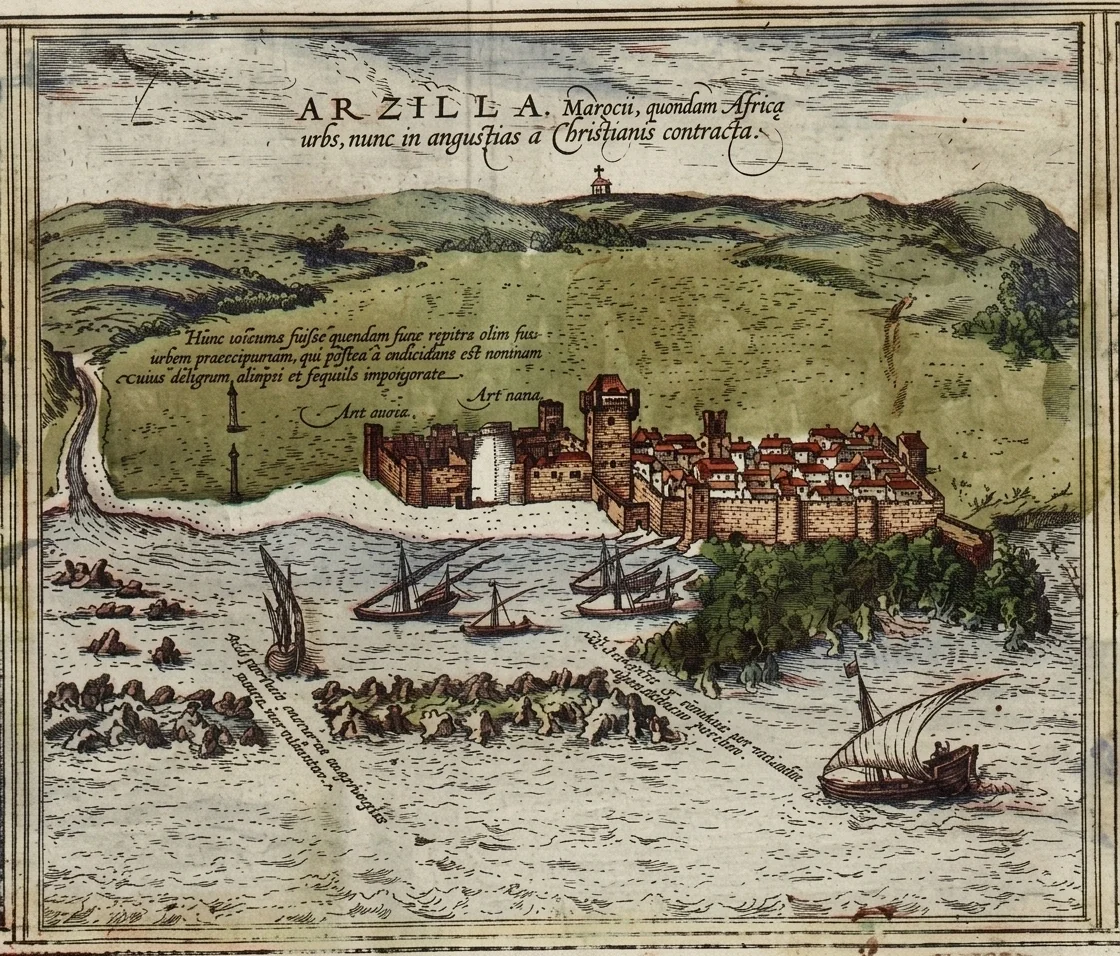
The most visibly noticeable chapter arrived in 1471, when Portuguese troops took the city and built the stone walls that still surround the medina, by order of Afonso V of Portugal. Three main gates from that fortification are preserved—Bab Homar, Bab el Kasbah, and Bab el Bahar—which still serve as the natural entrance to the old town today. More than a century later, in 1578, the Portuguese king Sebastian I departed from Asilah for the failed campaign that would end with his death at the Battle of the Three Kings, near Ksar el-Kebir, an episode that marked the end of Portuguese dominance in the region.
From the Saadians to Moulay Ismail
After the Portuguese defeat, control of the city passed into Saadian and, briefly, Spanish hands, until in 1691 the Alaouite sultan Moulay Ismail definitively incorporated it into Moroccan territory. It is to this era that a large part of the interior reconstruction of the medina, which can be explored today, is attributed.

The Spanish protectorate and the Church of San Bartolomé
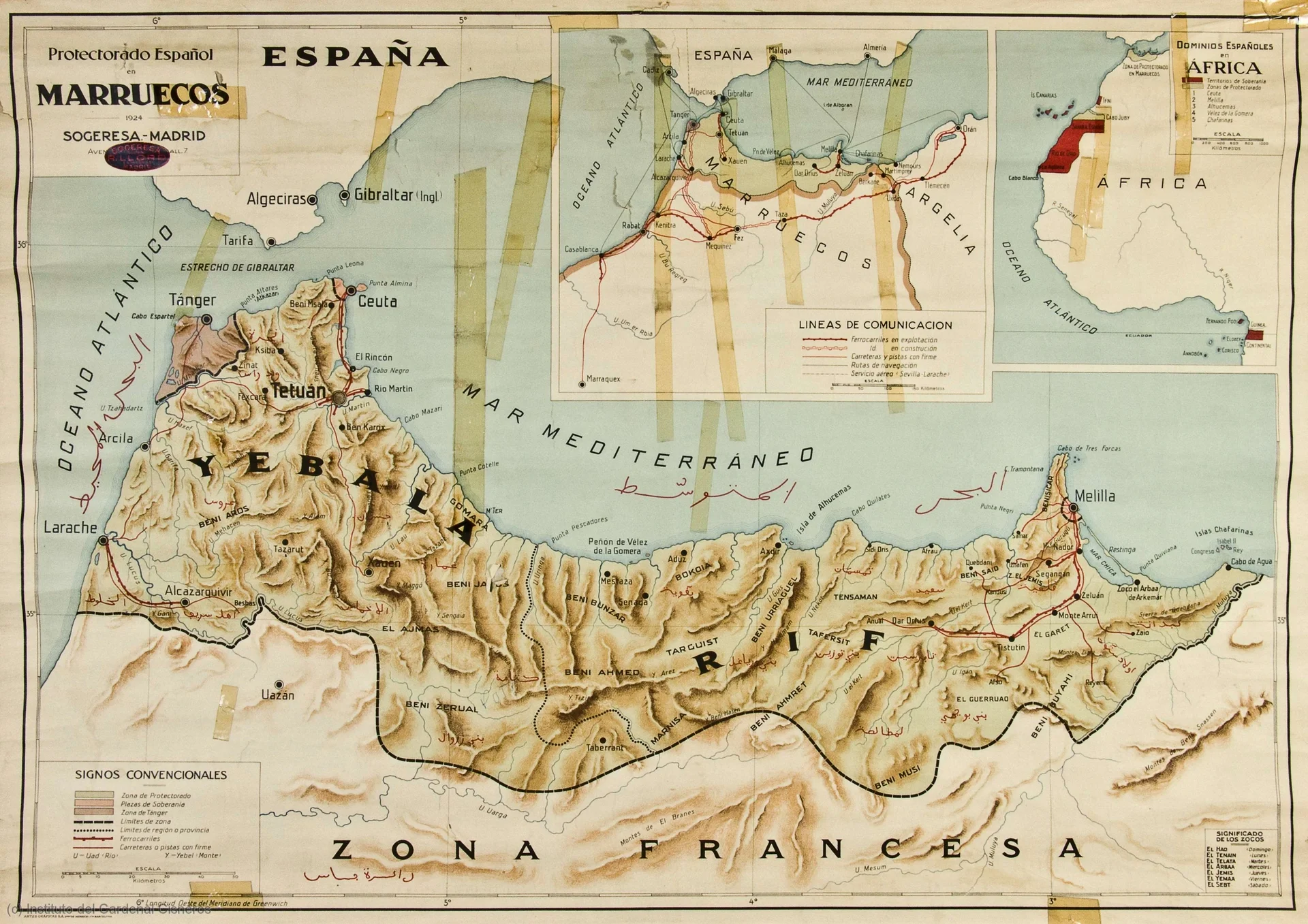
Between 1912 and 1956, Asilah was part of the Spanish protectorate in northern Morocco. From those years remains, among other traces, the Church of San Bartolomé, built by Spanish Franciscans in 1925 and one of the few churches in Morocco still allowed to ring its bells for Sunday mass.
The International Cultural Festival (since 1978)
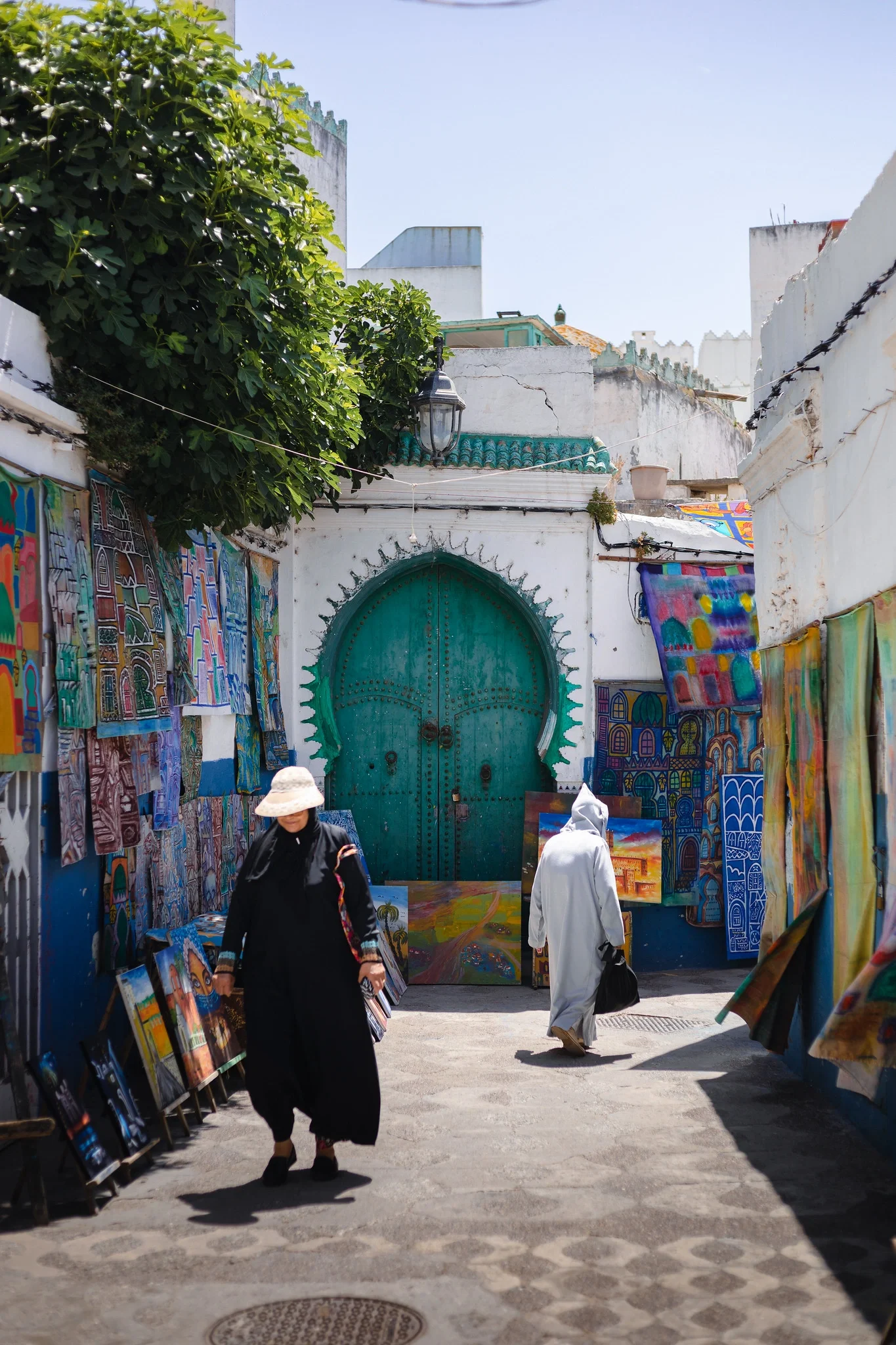
The most recognizable image of Asilah—its white facades painted with murals—was born in 1978, when the first edition of the International Cultural Festival (Moussem Culturel) was held, promoted by Mohamed Benaissa and painter Mohamed Melehi. Every summer, usually in July and August, artists from all over the world paint new murals on the walls of the medina while the city hosts exhibitions, concerts, and conferences. It is this festival that transformed a fishing village into one of the cultural benchmarks of North Africa.
"Between stone walls and the Atlantic"
What to see in the Asilah medina
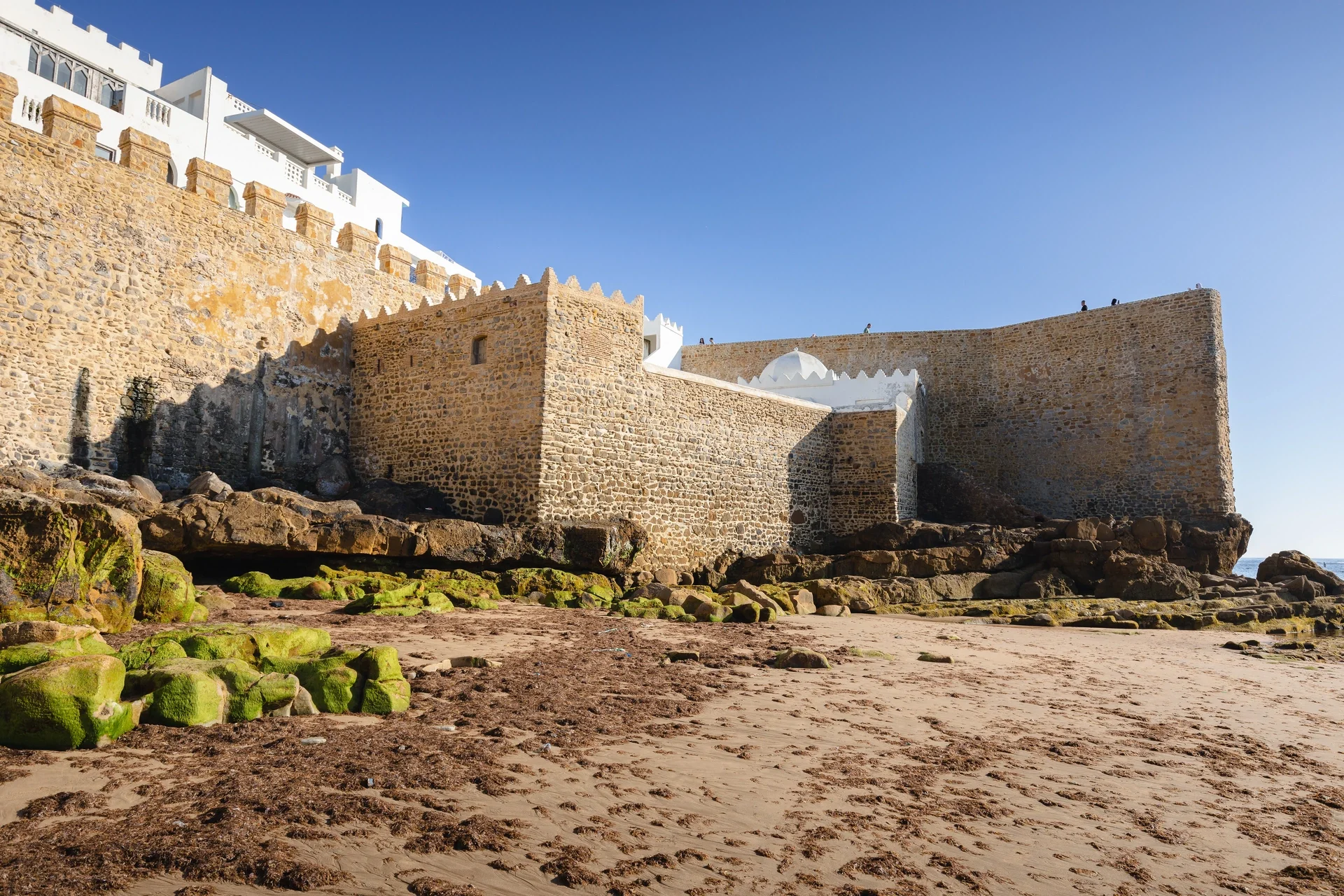
The Portuguese walls and their three gates
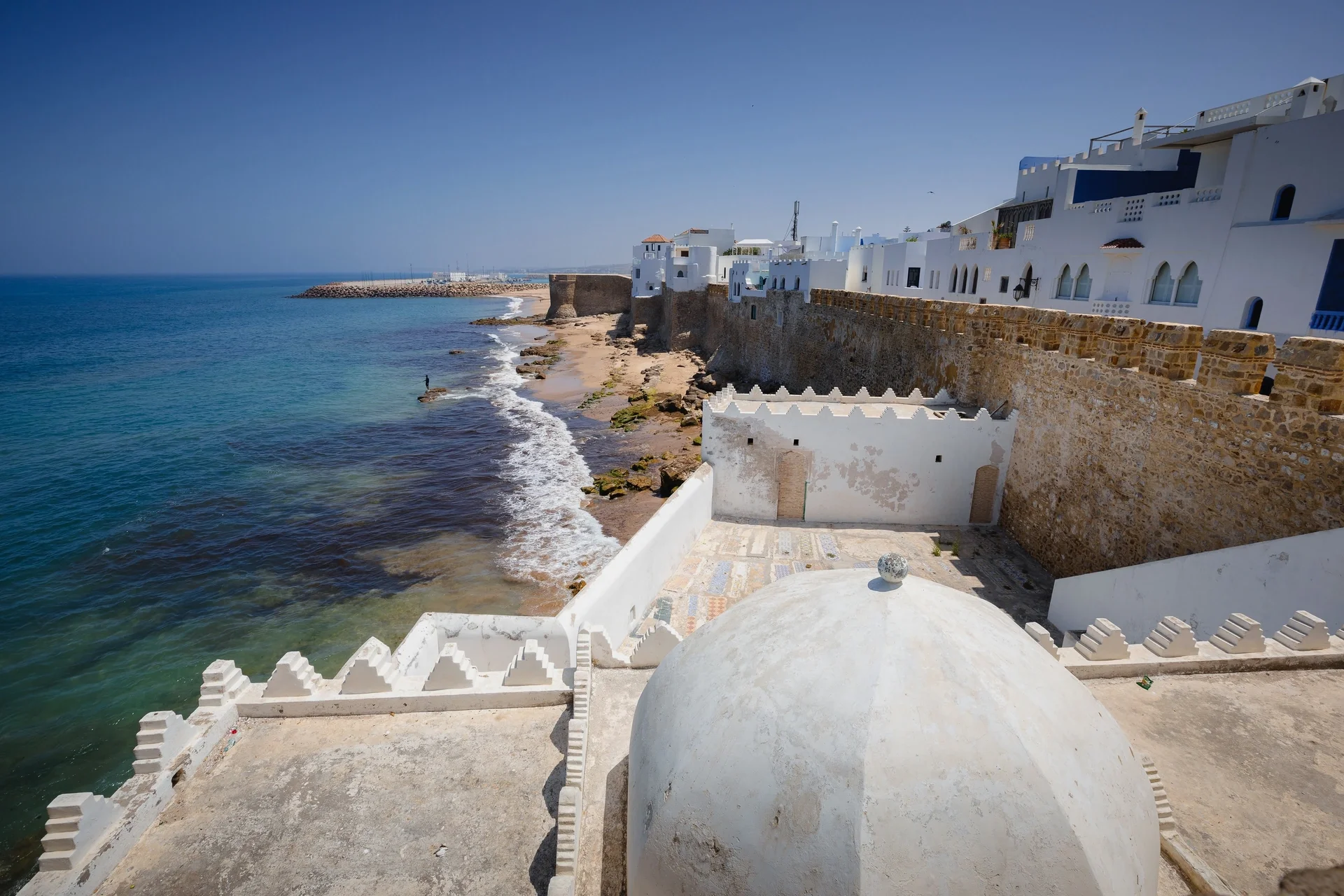
Bab Homar (the Land Gate), Bab el Kasbah, and Bab el Bahar (the Sea Gate) are the three historical accesses to the walled medina. You can walk along a good part of the rampart, with the ocean on one side and the white roofs of the medina on the other; it is one of the most highly recommended walks at sunset.
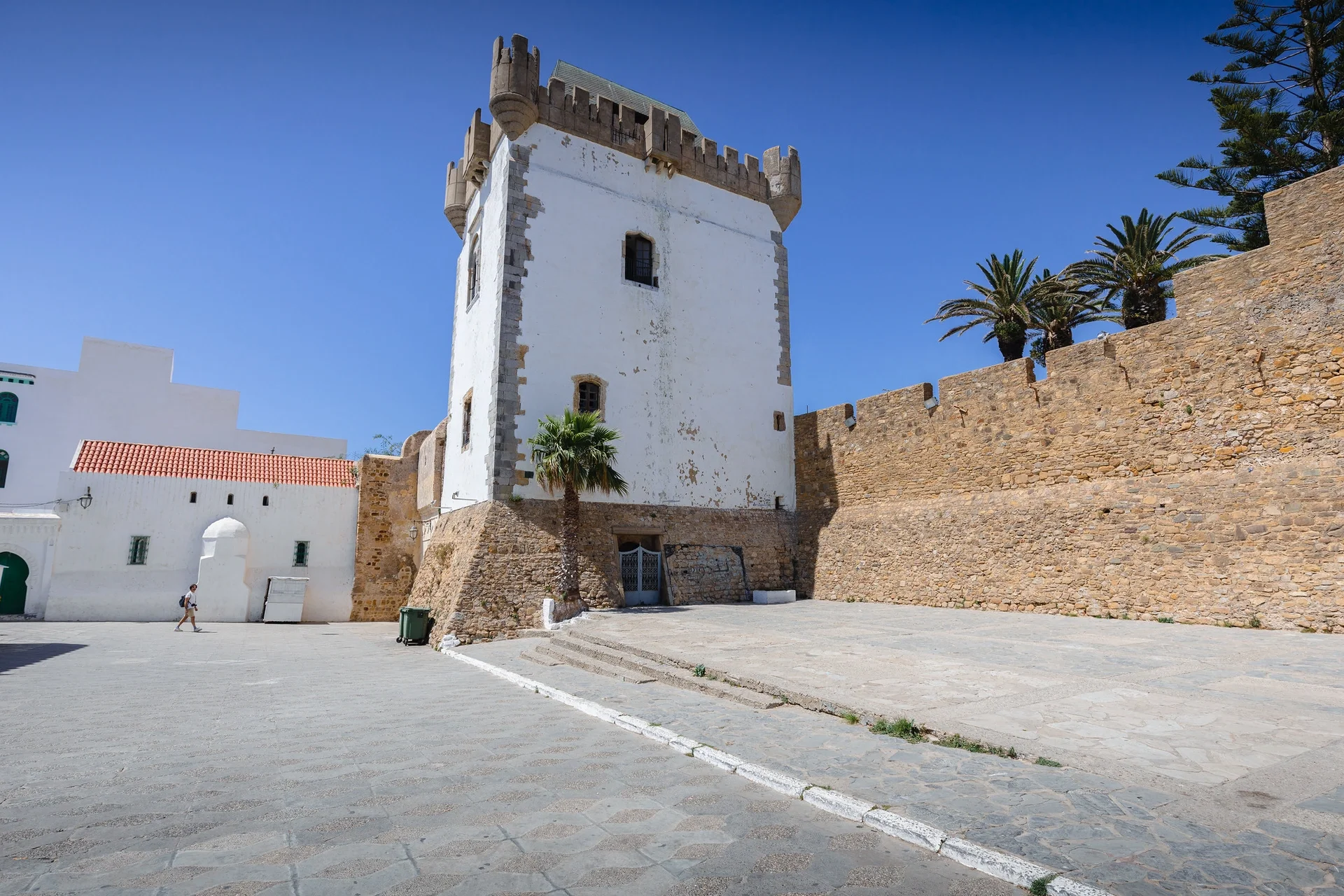
Borj Al Kamra Tower and Ibn Khaldoune Square
The most recognizable defensive tower in Asilah, square in shape, rises next to Ibn Khaldoune Square, very close to the Great Mosque. It is a good starting point to begin the route through the medina.
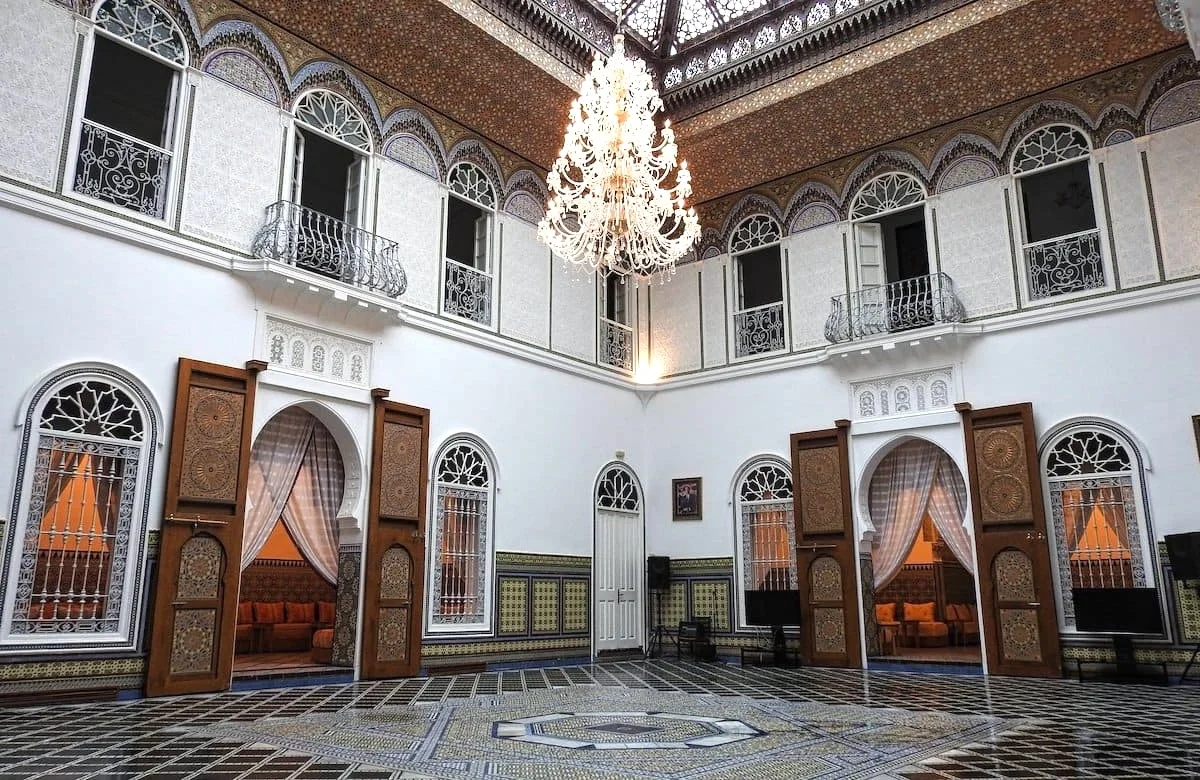
Palace of Culture (former Raissouni Palace)
This early 20th-century building was the residence of the caid El Raisuni, one of the most controversial figures in northern Morocco at the time. Today it functions as a cultural center and is one of the main venues for the International Cultural Festival, hosting exhibitions and conferences during the summer.
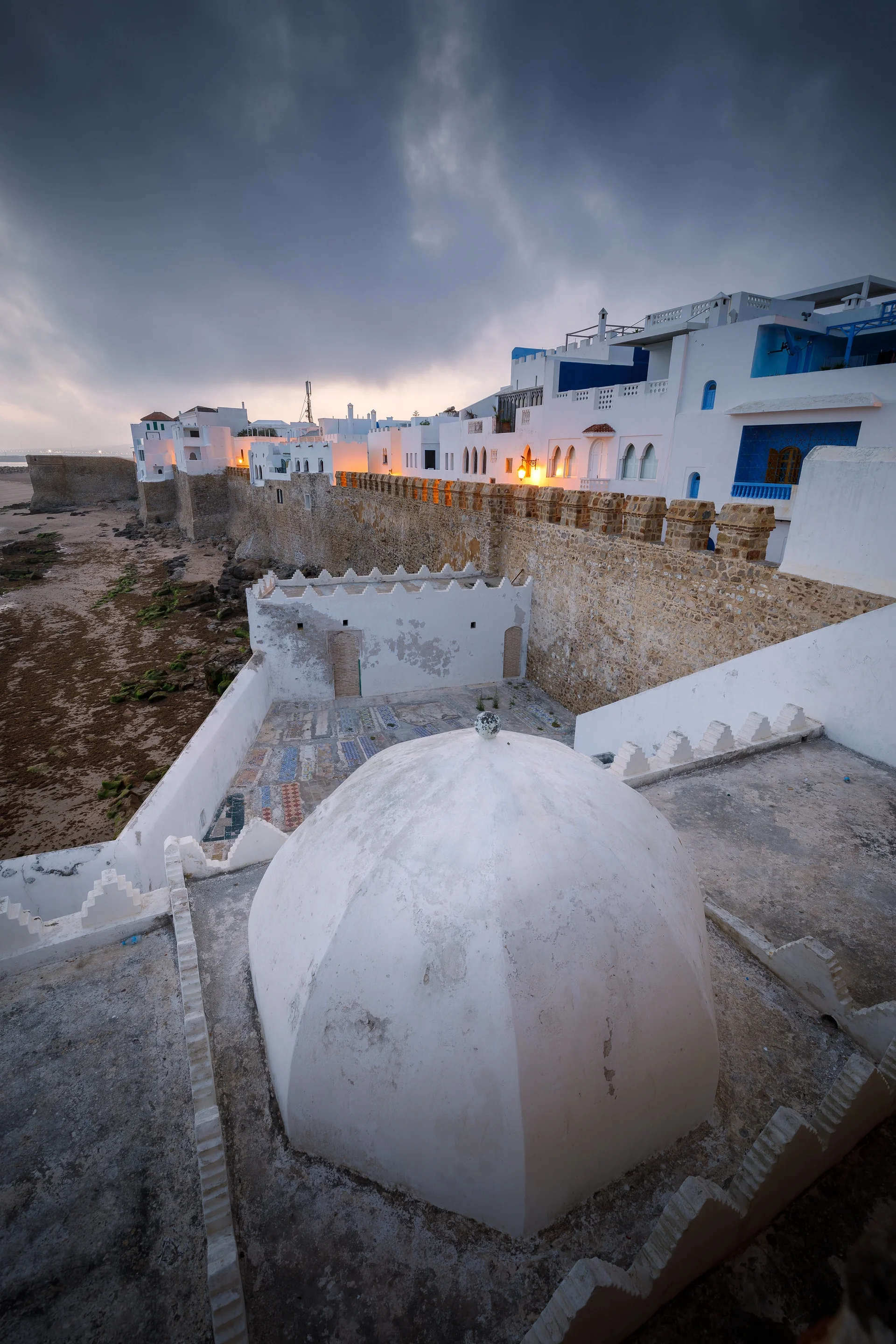
Mausoleum of Sidi Ahmed El Mansur
Next to the sea, inside the medina, lies the only Muslim cemetery within the walls of Asilah, with multicolored ceramic tombs oriented towards Mecca. Next to it is the mausoleum dedicated to Sidi Ahmed El Mansur, a highly venerated local saint.
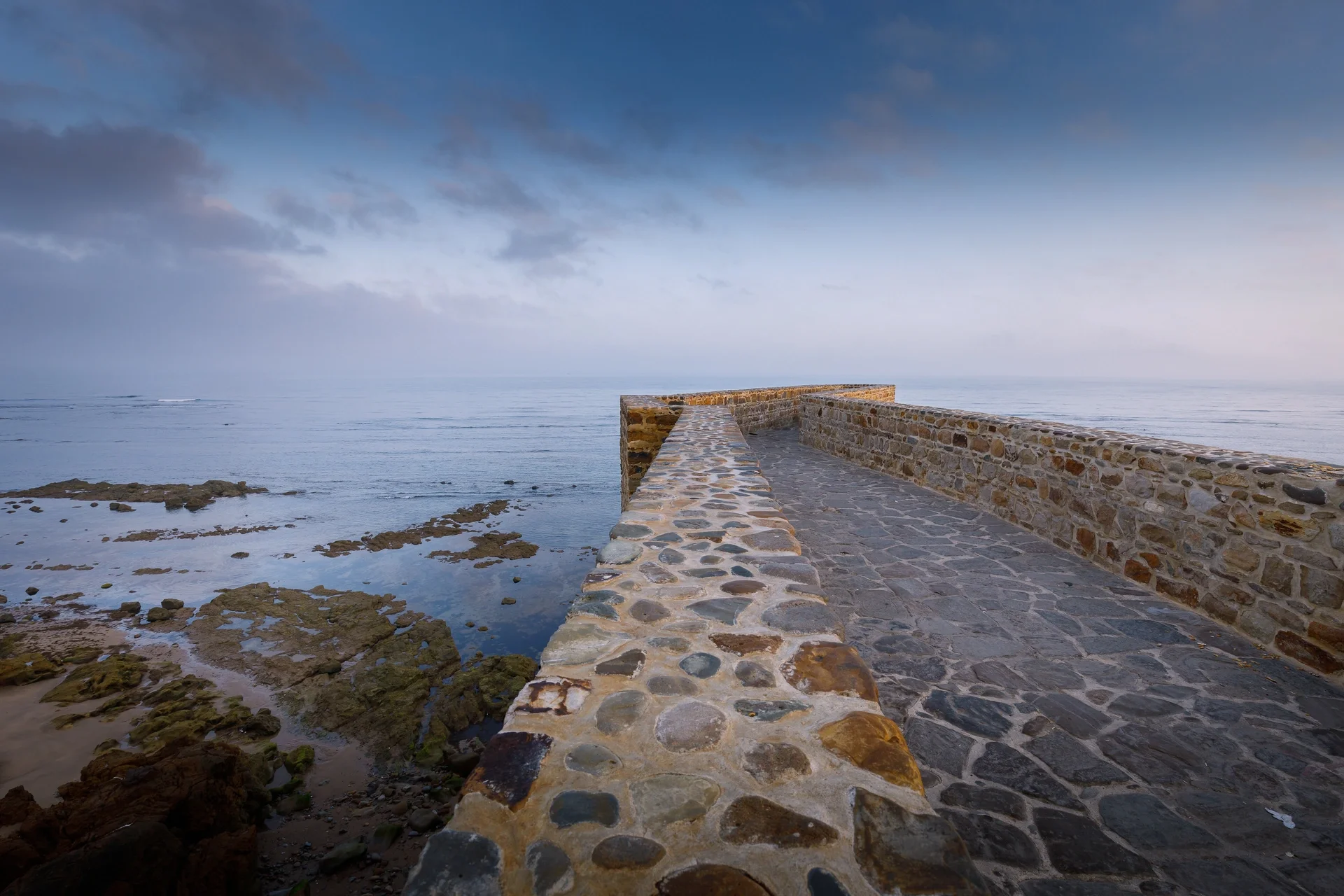
Caraquia Viewpoint (Krikia)
At the end of the walls, in the extreme southwest of the medina, this viewpoint on a breakwater is the most popular place to watch the sunset in Asilah. From here you can see Lalla Rahma beach, the line of walls and, on clear days, a large part of the coastline.
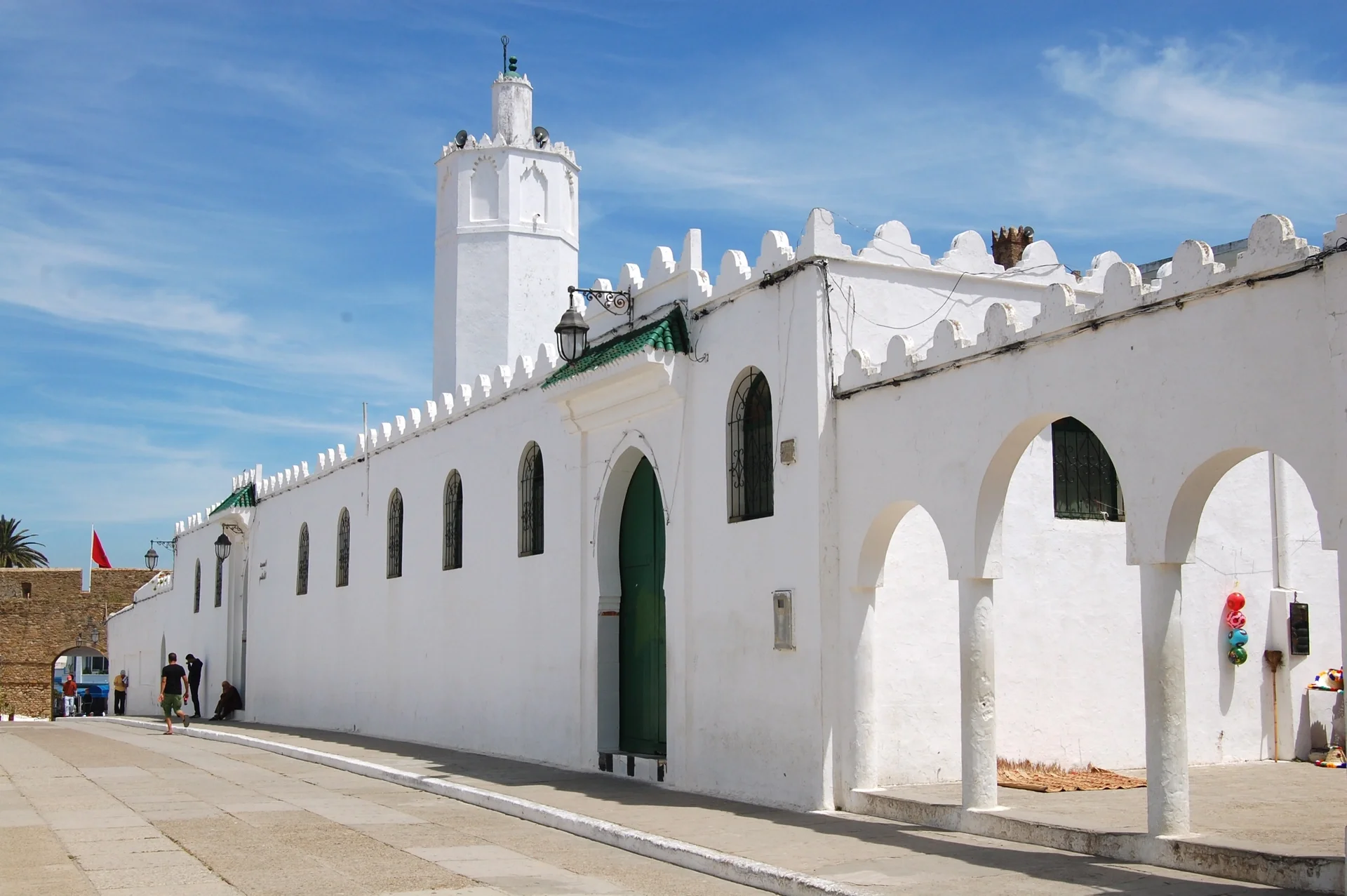
Great Mosque of Asilah
With its white facade and octagonal minaret, it is the only religious temple inside the medina. Its sober design contrasts with the profusion of murals in the nearby streets.
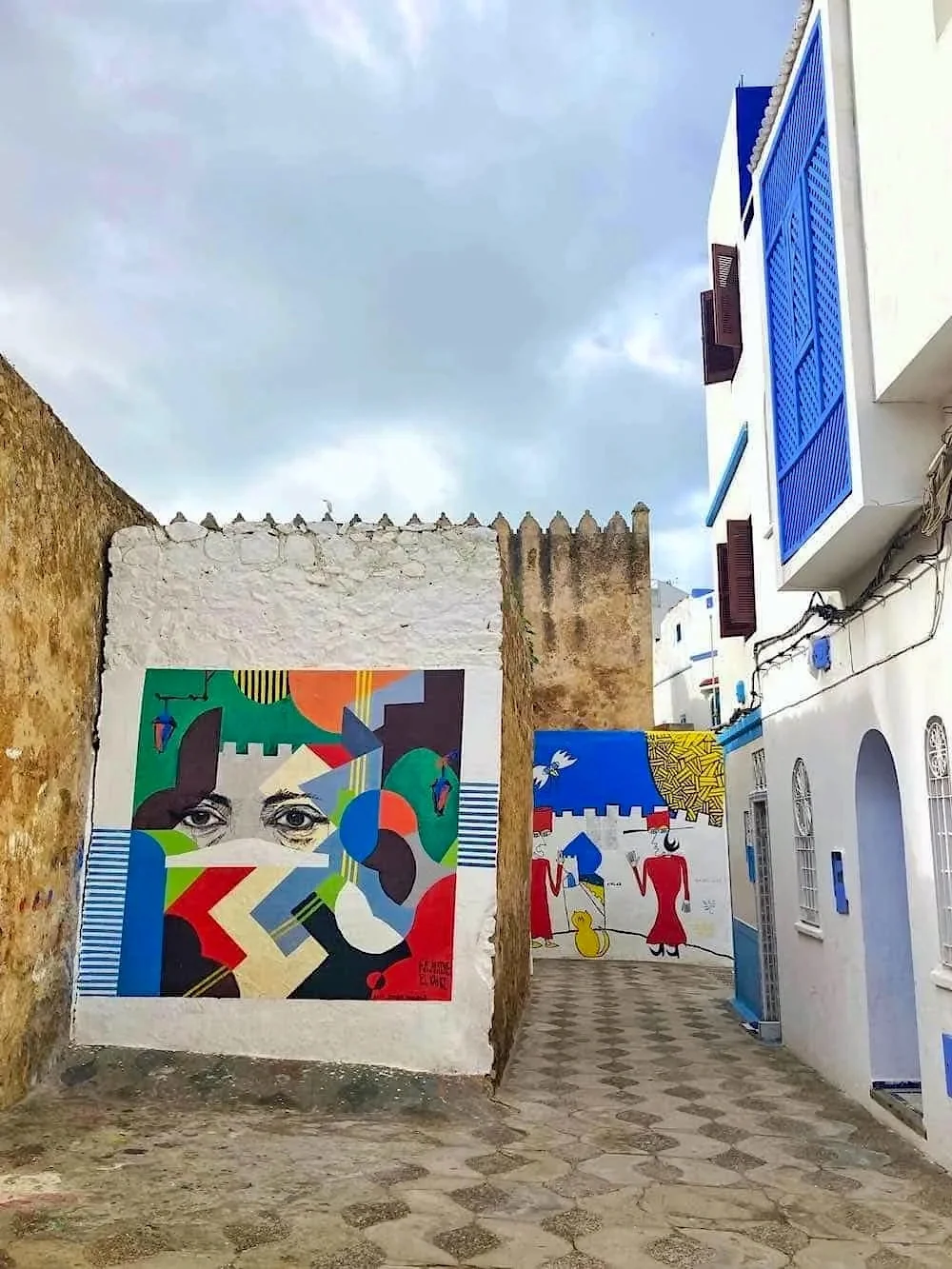
The murals of the medina
Repainted every summer during the Festival, Asilah's murals change from year to year: some are abstract, others geometric, others with Andalusian motifs in blue and white. Wandering aimlessly through the medina looking for them is, for many visitors, the main activity itself.
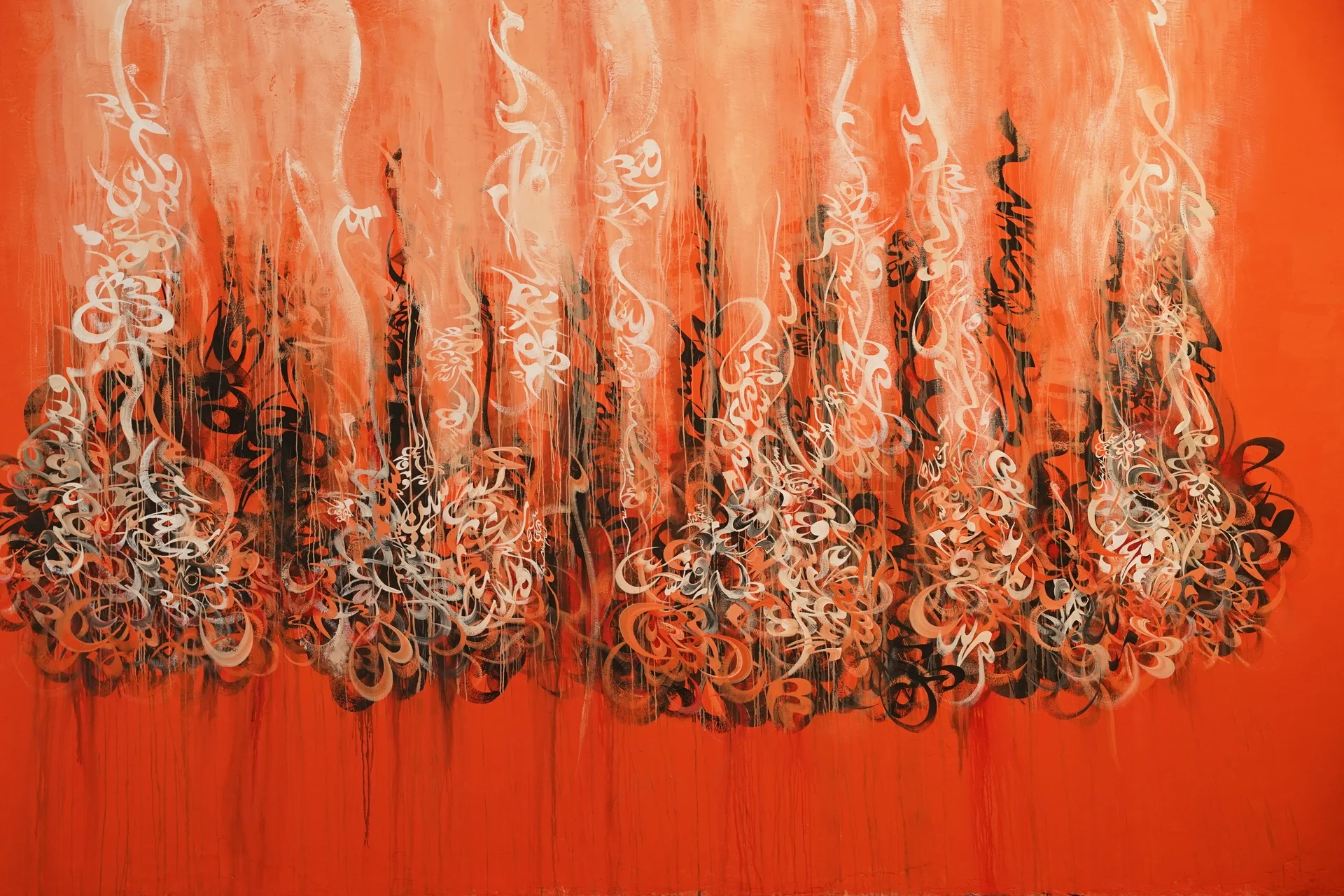
"Every summer, a new canvas"
15 things to do in Asilah
Get lost in the walled medina and its murals
Entering through Bab Homar and walking without a map is the best way to discover the medina: white alleys, blue doors, and a different mural on every corner.
Watch the sunset from the Caraquia Viewpoint
The most repeated plan for those visiting Asilah: arriving before the sun goes down and staying until the sky turns orange over the Atlantic.
Walk atop the Portuguese walls
The rampart walk that connects the three gates of the medina offers views of the sea on one side and the white rooftops on the other.
Swim or stroll along Lalla Rahma beach
At the foot of the medina, it is the most accessible beach in Asilah and the perfect place to end the day with your feet in the sand.
Experience a traditional hammam at Hammam Al Alba
A ritual of cleansing and relaxation with centuries of Moroccan tradition, facing the Atlantic.
Dine on Moroccan-Mediterranean cuisine at Al Alba Restaurant
An alternative to the classic fish restaurants in the medina, with local produce and a more contemporary approach.
Explore the Ahfir Souk and the Palace of Culture
The market next to Bab Homar and the former Raissouni palace, now a cultural center, are two classic stops on any route through the medina.
Take a day trip to Lixus
Less than an hour away, the Roman ruins of Lixus, near Larache, are one of the most highly recommended excursions from Asilah.
Discover wilder beaches: Sidi Mghait and Paradise Beach
For those seeking fewer people and more nature, these two beaches just a few kilometers from the city are the best option.
Buy handicrafts directly from the artisan
Rugs, ceramics, basketry, and silver are sold in small workshops inside the medina, without the pressure found in Morocco's larger souks.
Coincide with the International Cultural Festival
If the trip can be planned for the summer, watching the murals being painted live during the festival is a completely different experience than visiting Asilah the rest of the year.
Surf or kitesurf on the coast
The Atlantic waves and the westerly wind make several beaches near Asilah a regular destination for surfers and kitesurfers.
Take a horse-drawn carriage ride to Paradise Beach
A traditional—and very photogenic—way to reach one of the most beautiful beaches in the surrounding area.
Try fresh fish on the promenade
Grilled sardines, prawns, and the catch of the day take center stage in the restaurants overlooking the port of Asilah.
Go on a coastal bike ride
The coastal road that connects Asilah with its more distant beaches is perfect for a quiet bike ride, especially outside the hottest hours.
Beaches of Asilah
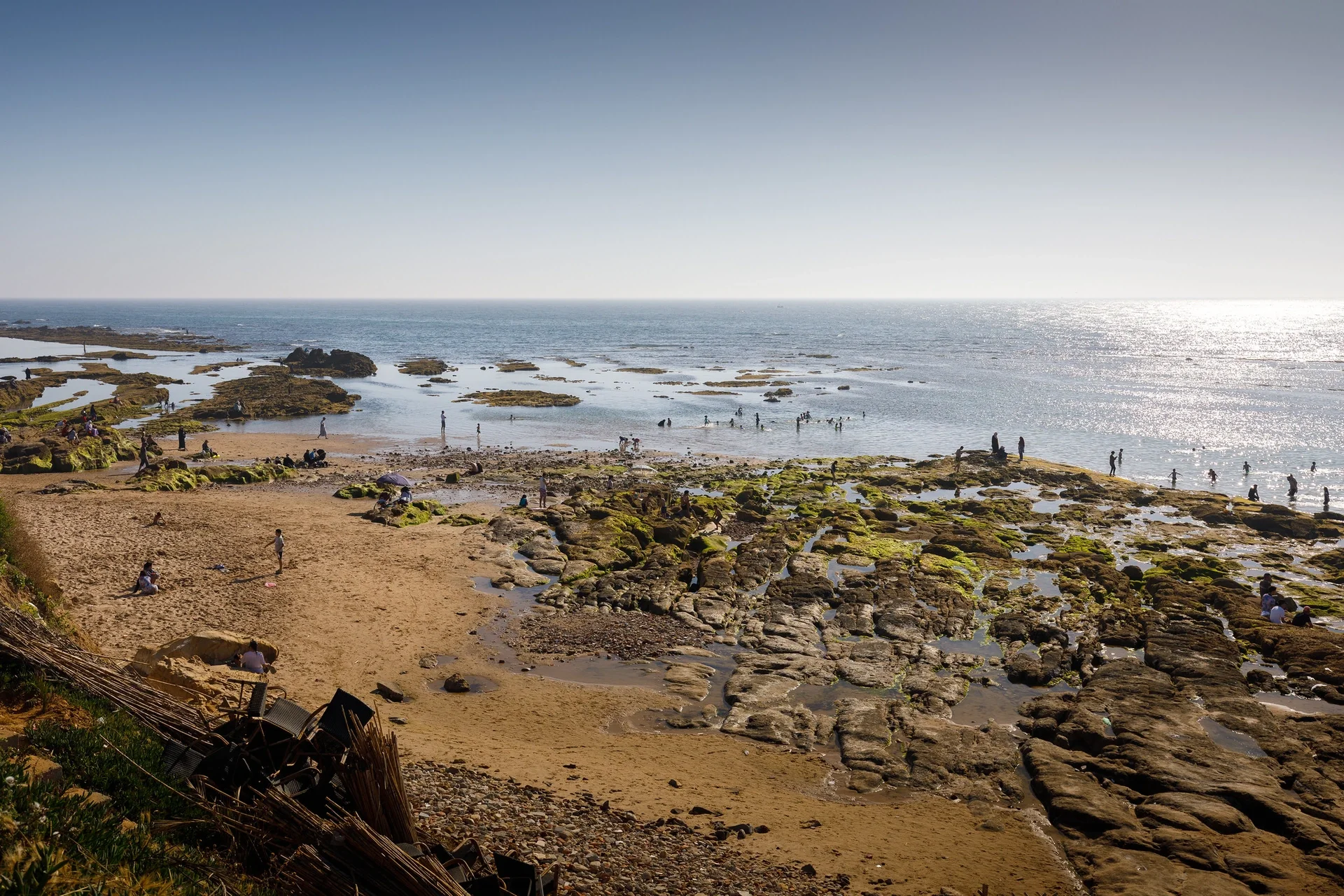
Lalla Rahma Beach
Right at the foot of the medina, it is the most accessible and crowded in high season. Ideal for a quick swim or a sunset walk without the need for a car.
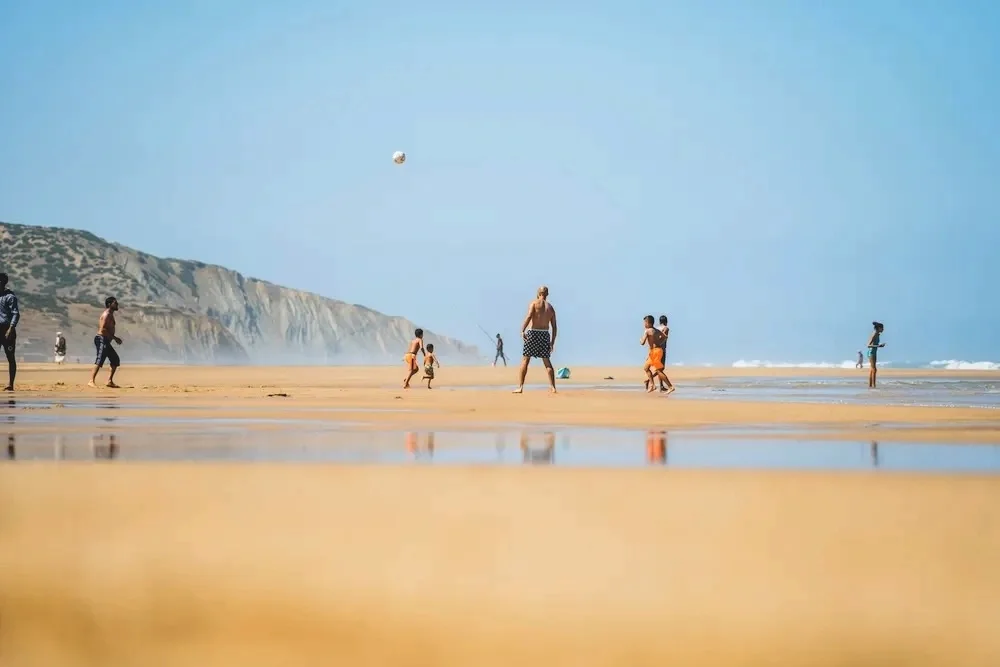
Paradise Beach (Playa de las Cuevas) Asilah
About 6 km from the center, accessible by car, taxi, or carriage. A wide beach, with cliff areas and caves that shelter it from the wind; in summer there are beach bars.
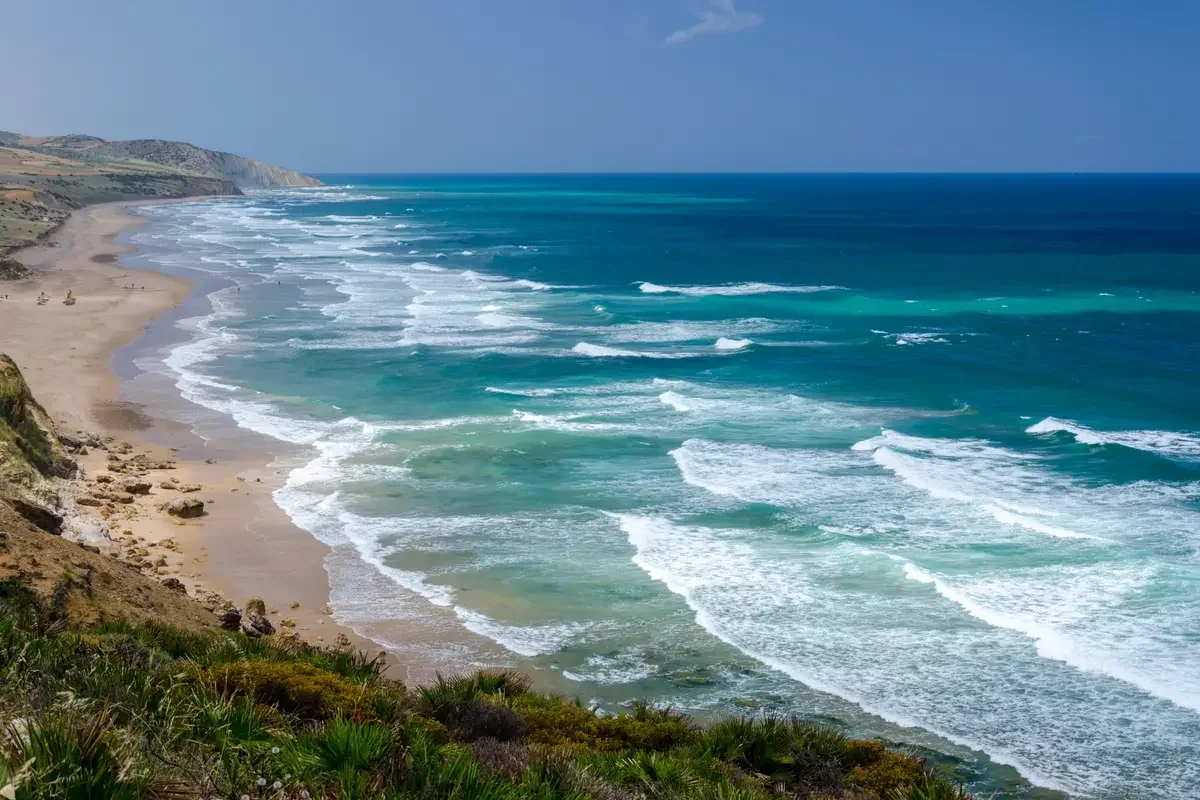
Sidi Mghait Beach
About 10 km away, with the last stretch on a dirt track. A much more natural environment, clean waters, and barely any services—it is advisable to bring water and food.
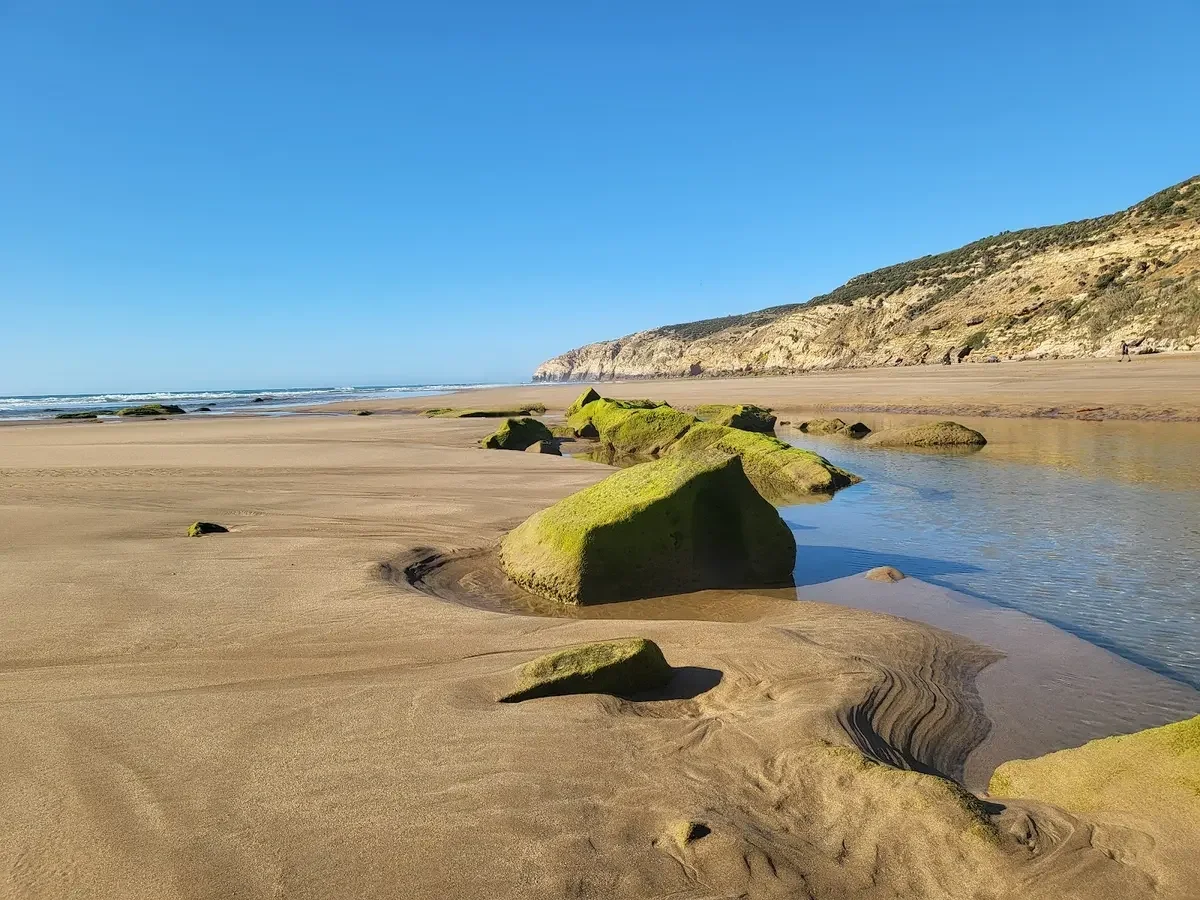
Briech and Kouass Beaches
Further south, this area combines the beach with the remains of an ancient Roman settlement dedicated to pottery, a curious stop for those traveling in their own car.
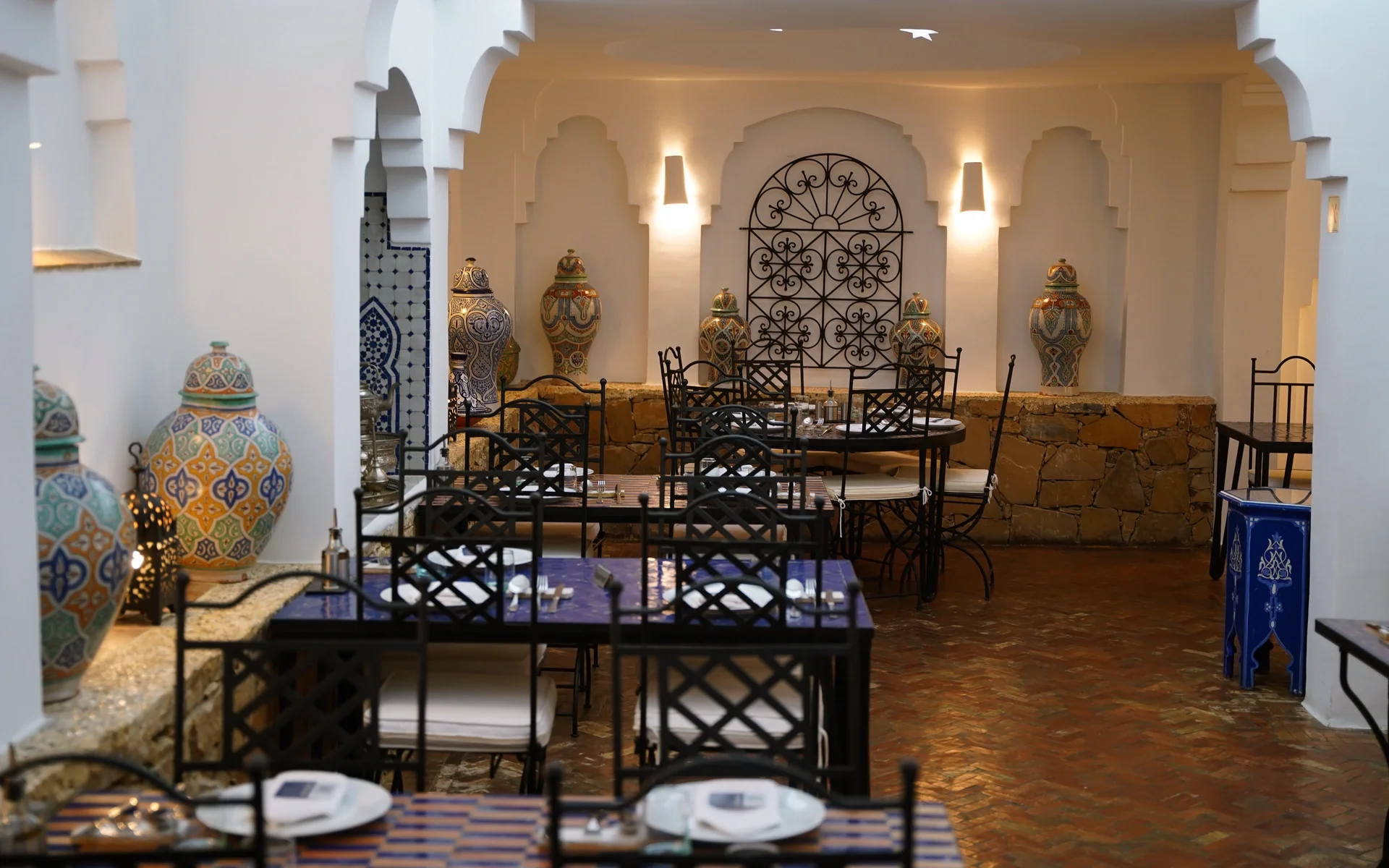
Where to eat in Asilah: Al Alba Restaurant
Al Alba Restaurant positions itself as an alternative for creative Moroccan-Mediterranean cuisine, compared to the traditional fish offerings of the medina. The kitchen's philosophy is based on local produce, seasonality, and technique, with an atmosphere that invites calm and conversation.
The menu combines Atlantic flavors with Moroccan tradition: reimagined tagines, the catch of the day with Mediterranean touches, and desserts that revive family recipes. The space, with sea views when the tide permits, becomes one of the most special corners in Asilah for a quiet dinner.
Relaxation and wellness: Hammam Al Alba
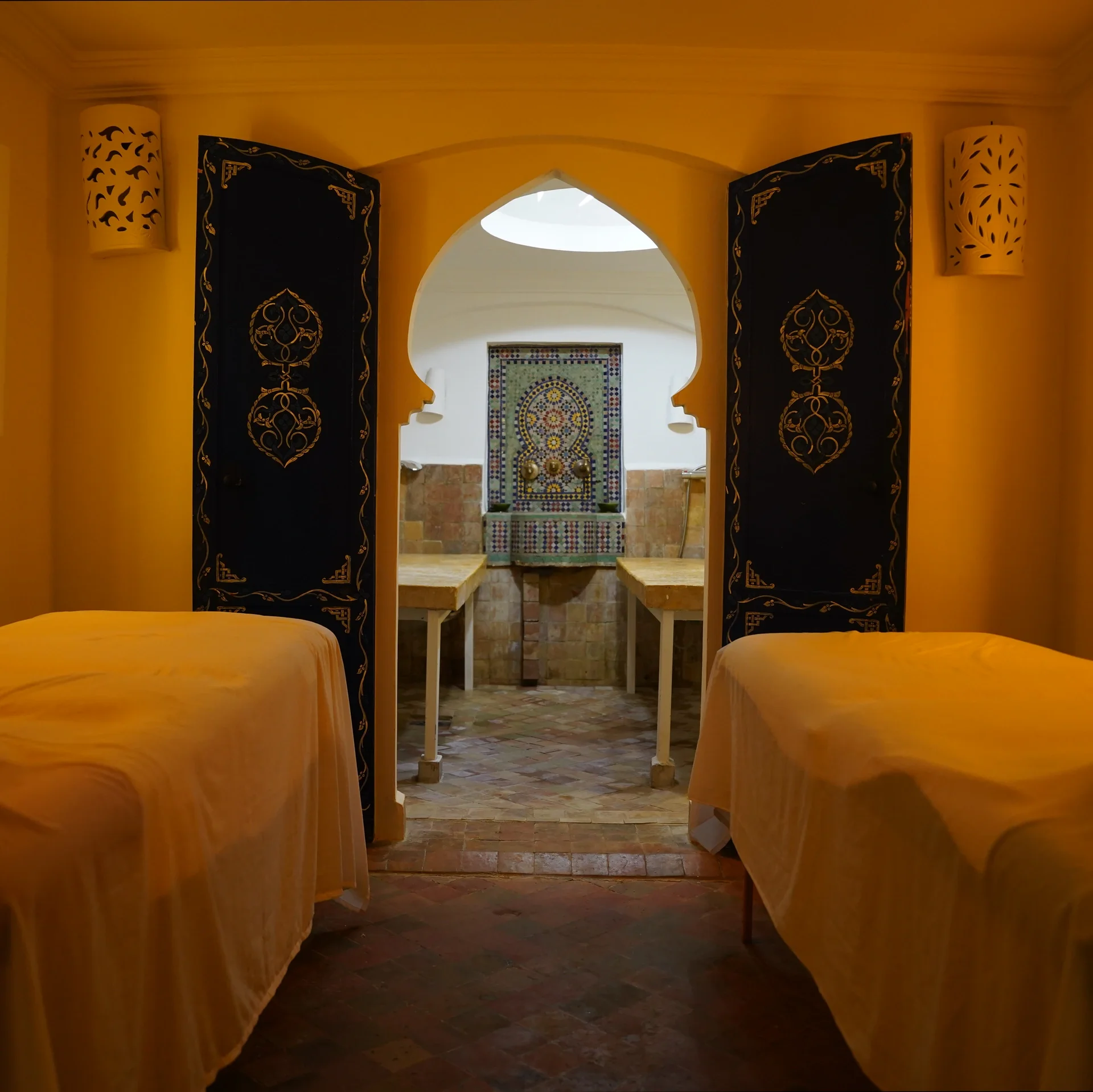
The traditional Moroccan hammam is much more than a steam bath: it is a ritual of deep cleansing, muscle relaxation, and reconnection with oneself that has been part of the country's culture for centuries. Unlike a Western spa, the hammam is experienced as a collective and therapeutic process, with defined stages that prepare the body and skin.
At Hammam Al Alba, the ritual begins with heat to open the pores, continues with exfoliation using a kessa glove and black olive soap, and culminates with a relaxing massage with essential oils. Designed especially for Western guests, it offers the authenticity of a public hammam with the intimacy and care of a professional service, facing the Atlantic.
Shopping in the medina
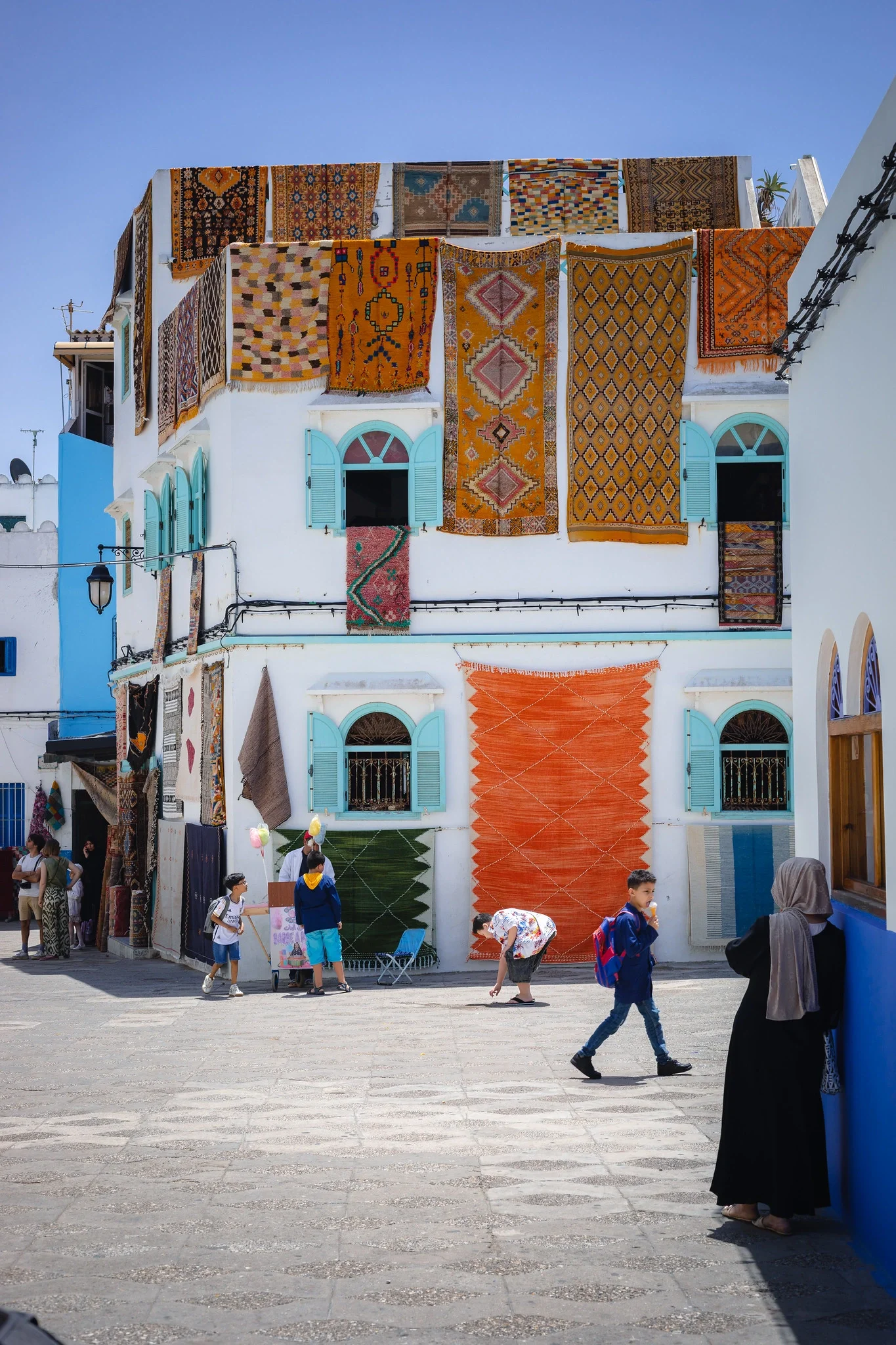
In the medina of Asilah there are no large tourist souks or pushy vendors: shopping for handicrafts here is quieter than in cities like Fez or Marrakech. Around the Ahfir Souk, next to Bab Homar, you will find stalls selling rugs, ceramics, basketry, and silver jewelry, many of them attended by the artisan themselves. It is also common to find small painters' studios and open workshops during the Cultural Festival.
How to get there and get around Asilah
By plane
The closest airport is Tangier Ibn Battuta, about a 45-minute drive or train ride from Asilah.
By train
The Asilah station has direct connections to Tangier and the rest of the railway network in northern Morocco.
By car or taxi
Asilah is just over 30 km from Tangier by road, a journey of about 40-45 minutes.
Parking
Parking is available near the main gates of the medina, especially near Bab el Kasbah.
Excursions from Asilah
Asilah is a good base for exploring northern Morocco without having to change accommodations every night: Tangier is 30 minutes away, Lixus and Larache are less than an hour away, and Tetouan and Chefchaouen make for a full-day excursion.
When to travel to Asilah: climate
Spring (April-June) and autumn (September-October) offer mild temperatures and fewer crowds. Summer, with the Cultural Festival, is the liveliest season, though it also sees the most tourism. Winter is quiet and sunny, with daytime temperatures rarely dropping below 12°C.
Where to stay in Asilah
The medina concentrates the most traditional atmosphere, featuring small riads; the modern area (Ville Nouvelle) offers more services; and the beachfront, where Hotel Al Alba is located, combines proximity to the sea with tranquility and easy access to both the medina and the northern beaches.
Hotel Al Alba Hammam & RestaurantFrequently asked questions about Asilah
How many days are needed to visit Asilah?
Half a day is enough to explore the medina and the Caraquia Viewpoint, but at least one night is recommended to enjoy the sunset and the quiet city once the day-trippers from Tangier have left.
Is the Asilah medina a UNESCO World Heritage Site?
No. This is a common misconception: the medina of Asilah is not on the official UNESCO list in Morocco (that distinction is held by, among others, the medinas of Fez, Marrakech, or Essaouira). What Asilah does preserve are its 15th-century Portuguese walls in very good condition and a remarkably well-kept and clean medina.
When is the Asilah International Cultural Festival held?
It is held every summer, usually between July and August, since its first edition in 1978. During those weeks, artists from all over the world paint new murals on the facades of the medina.
Is it safe to visit Asilah?
Yes. Asilah is one of the safest and quietest cities in northern Morocco, with a small medina that is well-lit and highly frequented by local families, making it especially comfortable to walk around even after dark.
Can you swim at the beaches in Asilah?
Yes, especially at Lalla Rahma beach, next to the medina, and at Paradise Beach. The Atlantic swell is stronger than in the Mediterranean, so it is advisable to pay attention to the flag system during high season.
How do you get to Asilah from Tangier?
By train, car, or shared taxi (grand taxi), in a journey of about 40-45 minutes along the coastal road.
When is the best time to travel to Asilah?
Spring (April-June) and autumn (September-October) offer mild temperatures and fewer crowds. Summer, with the Cultural Festival, is the season with the best atmosphere, although it also has the most tourism.
Can Asilah be visited in a day trip from Tangier?
Yes, it is the most common way to get to know it: half a day is enough for the medina and the viewpoint. Staying overnight also allows you to enjoy the sunset and the city without the day-trip crowds.
Where can you experience a traditional hammam in Asilah?
At Hammam Al Alba, facing the Atlantic, with a complete ritual of heat, exfoliation, and massage designed for both hotel guests and city visitors.
What should I eat in Asilah?
The traditional offerings revolve around fresh seafood from the coast: grilled sardines, prawns, and seafood tagines. Al Alba Restaurant also proposes a more contemporary Moroccan-Mediterranean cuisine alternative.
What markets can I visit in Asilah?
Asilah has 2 permanent fresh food markets that you can visit any day of the week. The largest, most traditional and crowded market in Asilah is the Thursday Souk. It is held weekly during the morning in the vicinity of Bab Homar (one of the main gates of the medina) and spreads across the esplanade of the old football field. It is the perfect place to immerse yourself in local life.